Best Time to Visit the Azores: Weather Month by Month
In this guide
The short answer: June and September are the best all-round months to visit the Azores. They are warm, noticeably drier than winter, and quieter than the July–August peak. Go in April or May if you most want to see blue and fin whales, and in July or August for the warmest sea, calmest boat trips and most hours of daylight. Winter (November to March) is mild and cheap but wet and windy, which matters on islands where the best views sit inside clouds.
What you are really deciding is how much rain and cloud you will accept in exchange for fewer people and lower prices. The numbers below are IPMA’s official 1981–2010 climate normals for Ponta Delgada on São Miguel, where most visitors stay. The weather changes fast here; one valley can be sunny while the crater lake above it is invisible.
Azores weather month by month
Figures from IPMA’s climate normal for Ponta Delgada (Observatório Afonso Chaves), the official Portuguese weather service, station at 35 m above sea level.
| Month | Avg high | Avg low | Rain | Rainy days (≥1 mm) | Verdict |
|---|---|---|---|---|---|
| January | 17.2 °C | 12.4 °C | 111.5 mm | 13 | Wet, windy, quiet |
| February | 17.1 °C | 11.7 °C | 95.2 mm | 11–12 | Coolest nights |
| March | 17.6 °C | 12.4 °C | 98.6 mm | 12 | Baleen whales start |
| April | 18.4 °C | 12.8 °C | 83.3 mm | 10 | Whales; spring green |
| May | 19.8 °C | 14.1 °C | 70.2 mm | 9 | Whales; drier |
| June | 22.0 °C | 16.3 °C | 45.9 mm | 7 | Excellent all-round |
| July | 24.3 °C | 18.4 °C | 28.1 mm | 5 | Driest; busy |
| August | 25.7 °C | 19.5 °C | 47.3 mm | 6–7 | Warmest; busiest |
| September | 24.7 °C | 18.8 °C | 87.9 mm | 10 | Warm sea; fewer people |
| October | 22.3 °C | 16.8 °C | 109.6 mm | 12 | Shoulder; rain returns |
| November | 19.8 °C | 14.6 °C | 116.0 mm | 13 | Wet; low prices |
| December | 18.2 °C | 13.1 °C | 158.9 mm | 15 | Wettest month |
A few things the table tells you that guidebook summaries miss:
- It never gets hot. Over the 30-year period IPMA recorded no days at or above 30 °C in Ponta Delgada. August averages about 22 days at 25 °C or more; even July only about 12.
- It never freezes at sea level. Frost days: zero. The coldest night on record in the period was 5.0 °C.
- The annual range is small. Average highs move only about 8.5 °C between February and August. What changes most through the year is rain, wind and cloud, not temperature.
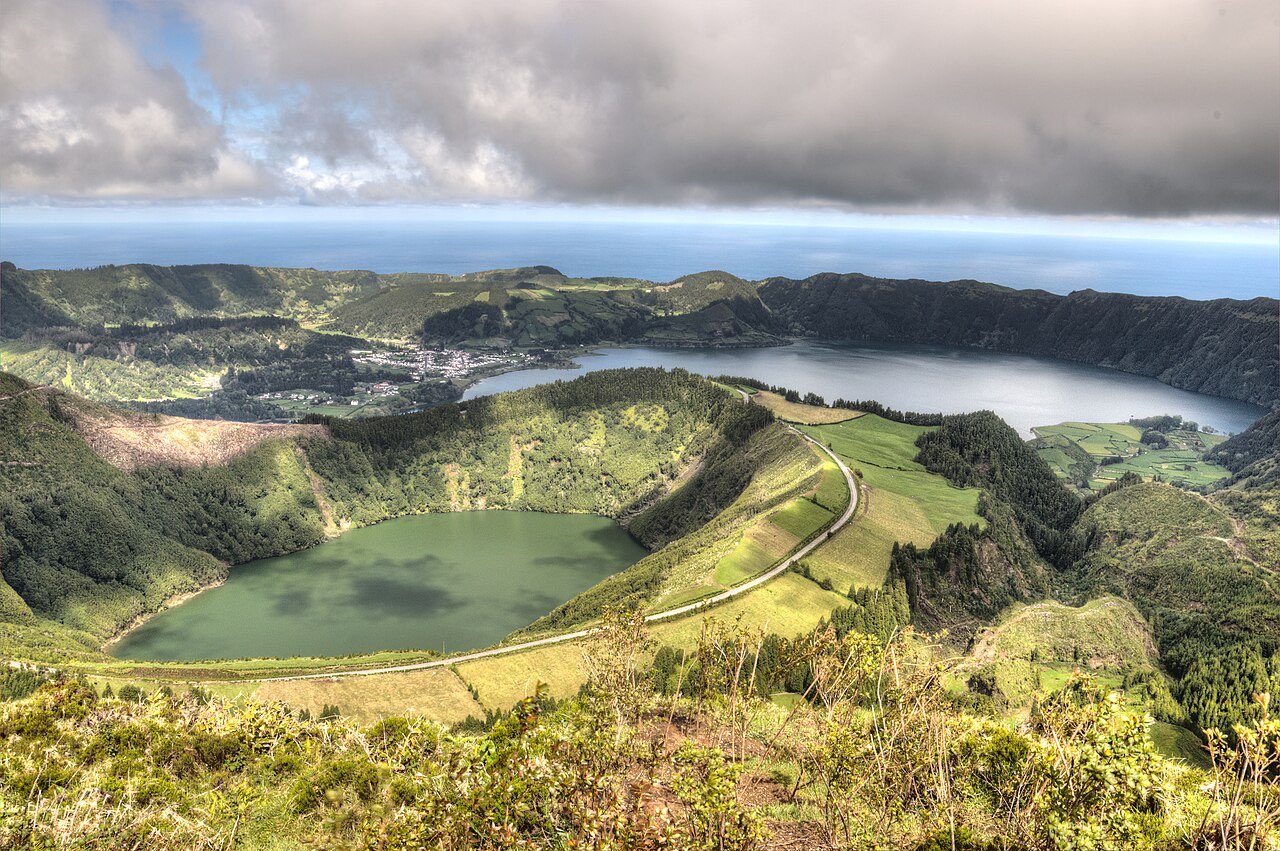
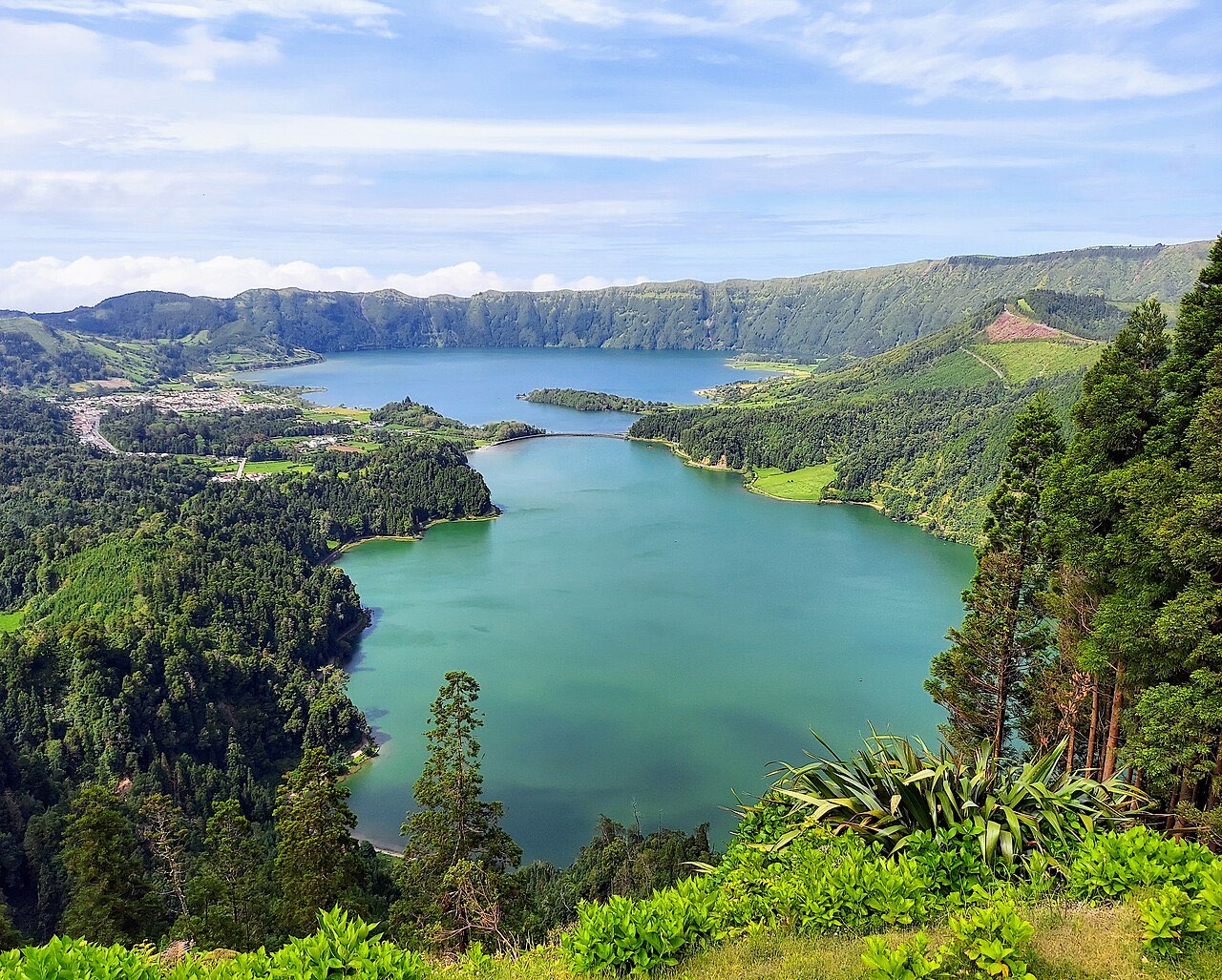
- Altitude changes everything. Ponta Delgada’s station sits at 35 m. Lagoa do Fogo and Sete Cidades viewpoints are several hundred metres higher, colder, windier and far more often in cloud. Pack a warm layer in any month.
The seasons, and who each one suits
Spring (March to May): whales and green hills
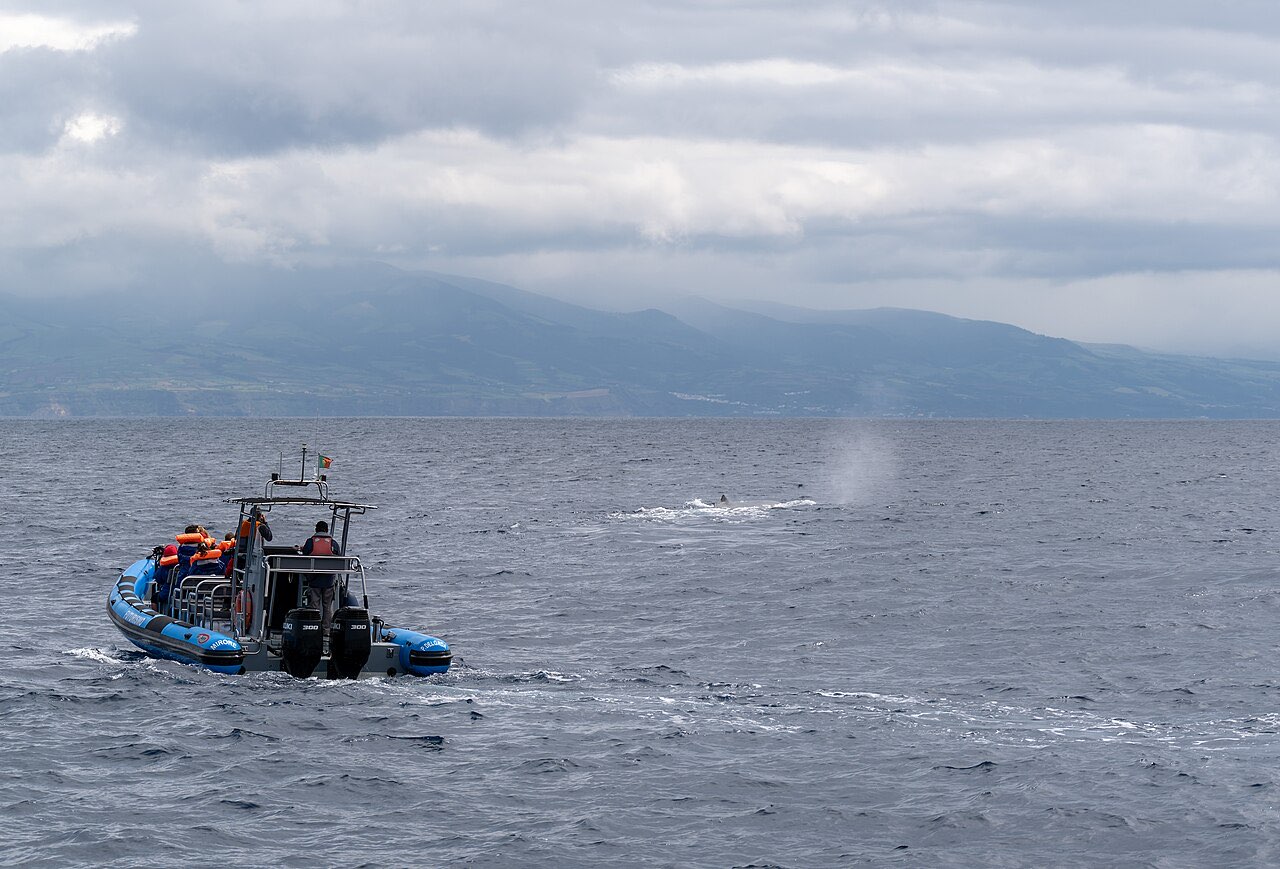
Average highs of 17–20 °C and rain easing month by month. This is peak season for the big migrating whales: blue, fin and sei whales pass the islands from about March to June, and Futurismo, one of the largest whale-watching operators, names April and May as its strongest months. Flowers are out, hiking trails are green, and crowds are thin until late May. The catch: seas can be rough, and some boat trips and inter-island ferries get cancelled.
Best for: whale watchers, hikers who do not mind mud, travellers on a budget.
Summer (June to August): the reliable window
This is the driest and warmest stretch, with July averaging only about five rainy days in Ponta Delgada. Seas are calmest, so whale trips, ferries between Pico, Faial and São Jorge, and swimming in the sea are at their most dependable. Hydrangeas line the roads from about late June. Summer is also the season of the Lagoa do Fogo access scheme on São Miguel: in 2025 the regional government ran a shuttle and restricted private cars on the road to the lake viewpoints from 15 June to 30 September, between 9 a.m. and 7 p.m. Check the Azores tourism office’s shuttle page for the current year’s dates and fare.
July and August are the busiest months. Rental cars sell out and prices climb, so book early. June is the sweet spot: almost as dry, a little cooler, and noticeably quieter.
Best for: families, first-time visitors, anyone hopping islands by ferry.
Autumn (September to November): warm sea, fewer people
September is arguably the best-kept secret: average highs of 24.7 °C, the sea still warm from summer, and the school holidays over. Rain picks up from late September, and by November it is one of the wetter months. Sperm whales and dolphins are still around, so whale trips continue, but more days are lost to swell.
Best for: couples, swimmers, travellers who want summer weather without summer crowds (September); budget travellers (November).
Winter (December to February): mild, wet and cheap
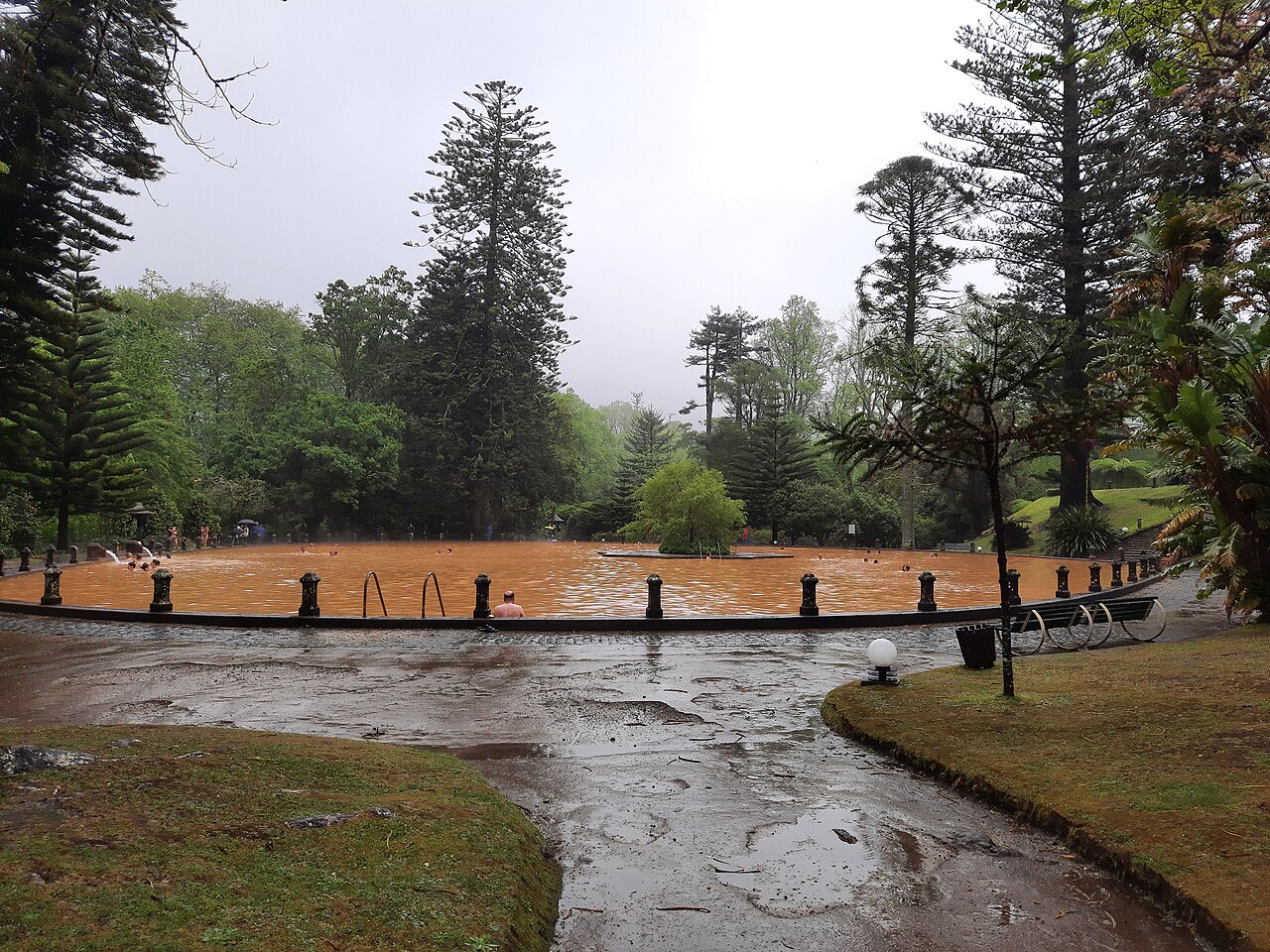
Highs of about 17 °C sound pleasant, but December averages around 15 rainy days and nearly 160 mm of rain, and Atlantic storms bring strong winds. Viewpoints are often clouded over, some trails are muddy, and ferries in the central group are more likely to be cancelled. On the other hand, flights and hotels are at their cheapest, the hot springs are at their best on a cold grey day, and you will often have places to yourself.
Best for: hot-spring lovers, return visitors, travellers who are flexible day to day.
Best time for specific things
| If you want… | Go in… | Why |
|---|---|---|
| Blue and fin whales | April–May (March–June) | Baleen whales migrate past the islands |
| Sperm whales and dolphins | Any month; summer best | Resident populations; calmer seas |
| Hiking | May–June, September | Drier trails, mild temperatures, long days |
| Swimming in the sea | July–September | Warmest water; calmest swell |
| Hydrangeas | Late June–July | Peak bloom on São Miguel; later on Flores |
| Hot springs | October–March | Cool air, fewer bathers |
| Island-hopping by ferry | June–September | Fullest timetables, fewest cancellations |
| Lowest prices | November–March (except holidays) | Off-season rates |
Sea temperature
IPMA does not publish a simple sea-temperature table for visitors, so treat this as a rough guide: the Atlantic around the islands is coolest in late winter and early spring (typically the mid-teens °C) and warmest from August to early October (typically low 20s °C). Natural rock pools and harbour swimming spots are popular from about June. If you hate cold water, the thermal pools are warm all year; our São Miguel guide lists the main ones.
Whale season in detail
Sperm whales and common, bottlenose and Risso’s dolphins live around the islands all year. The migrating baleen whales are the reason spring is famous. Our Azores whale watching guide has the full species calendar and the regional rules that boats follow.
Hydrangea season
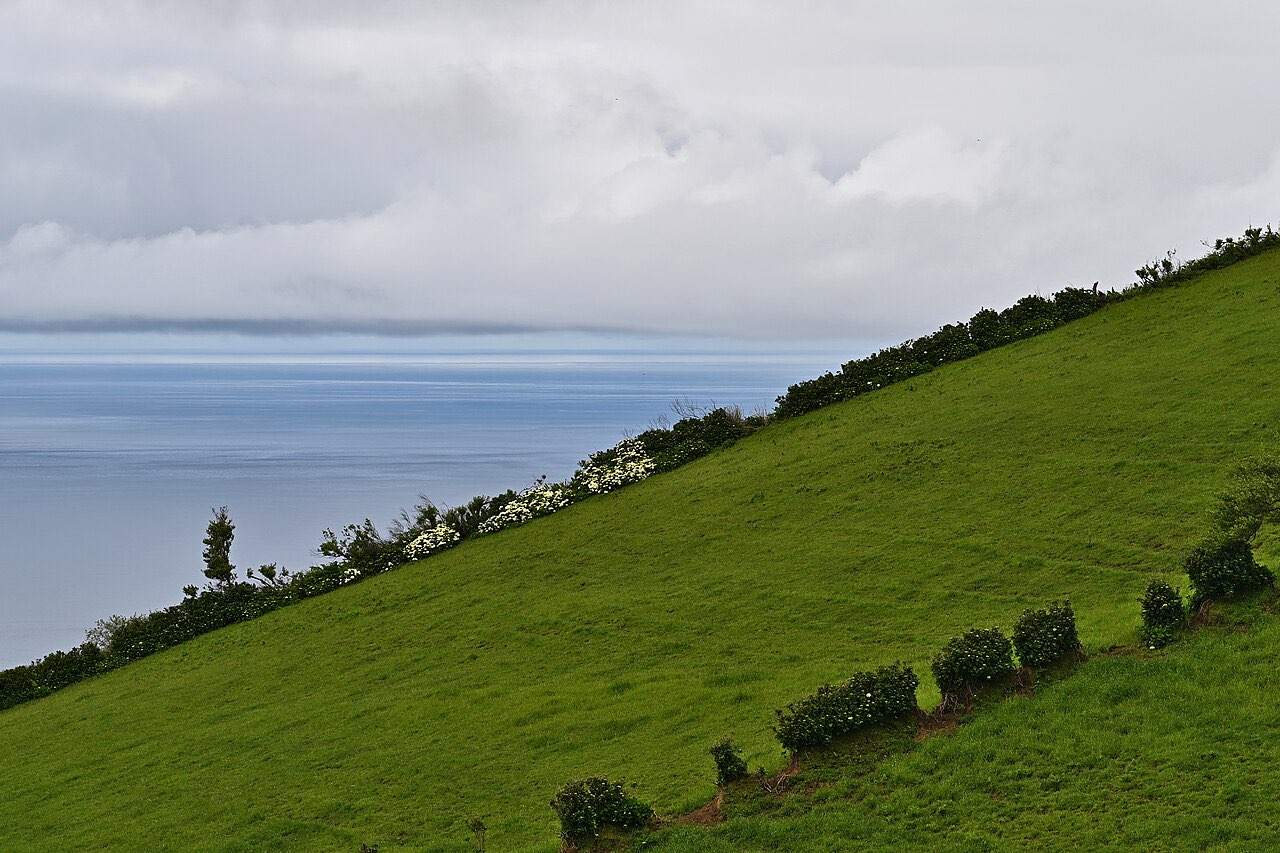
The blue and white hydrangea hedges that line Azorean roads and fields bloom roughly from June into August. Most sources put the São Miguel peak in late June and July; higher ground and Flores, the “flower island” in the west, peak later. Bloom varies by altitude and by year, so aim for late June to late July.
Festivals worth planning around
- Senhor Santo Cristo dos Milagres, Ponta Delgada. The biggest religious festival in the Azores, held around the fifth Sunday after Easter. In 2026 the main procession was on 10 May. With Easter on 28 March in 2027, the main day should fall in early May 2027; check the festival’s official site for dates. Ponta Delgada hotels fill up that week.
- Holy Spirit festivals (Festas do Espírito Santo). Held across the islands from Pentecost through the summer, with processions and free communal soup in many parishes, most famously on Terceira.
- Summer town festivals. Most towns hold a summer festa in June, July or August, with music, food stalls and fireworks. Terceira and Faial both have large ones; dates are set each year by the town councils.
How long to stay, by season
In summer, five days on São Miguel or a week on two islands works well because you can trust most days. In winter, add one or two buffer days: viewpoints, boat trips and inter-island flights or ferries are more likely to be disrupted, and having slack lets you wait for a clear morning at Sete Cidades. Our 7-day Azores itinerary is built with a weather buffer in it, and things to do in the Azores marks which activities work in the rain.
Mistakes to avoid
Trusting the island-wide forecast. Check the weather at the specific spot. Webcams and local forecasts by town are more useful than one figure for “the Azores”.
Driving to a crater viewpoint in thick cloud. If the lake is socked in, go somewhere else and come back. Clouds often lift within hours.
Packing only for the averages. A 22 °C day in Ponta Delgada can be 14 °C and wet at a viewpoint an hour away. Bring a rain jacket and a warm layer in every season.
Assuming spring means calm seas. The whale season coincides with livelier water. Book boat trips early in your stay.
Booking August at the last minute. Rental cars are the first thing to run out.
The bottom line
- Best overall: June and September.
- Best for whales: April and May.
- Most reliable weather and boats: July and August, if you book early.
- Cheapest and quietest: November to March, with spare days built in.
Climate figures are IPMA’s published 1981–2010 normals for Ponta Delgada; seasonal wildlife information comes from operators’ published sighting data; festival and access information from the organisers and the regional government, read in November 2026. Check dates for the year you travel.
Frequently asked questions
What is the best month to visit the Azores?
For most people, June or September. Both are warm (average highs of about 22 °C and 25 °C in Ponta Delgada), much drier than winter, and less crowded than July and August. Choose April or May if whales are the priority, and July or August if you want the warmest sea and the most reliable boat trips.
When is the rainy season in the Azores?
Rain falls in every month, but October to March is the wet half of the year. IPMA's 1981-2010 normals for Ponta Delgada show 158.9 mm of rain in December, the wettest month, against 28.1 mm in July, the driest. December averages about 15 days with at least 1 mm of rain; July about 5.
Is the Azores warm in winter?
Mild rather than warm. In Ponta Delgada, average highs stay around 17 °C from January to March and lows around 12 °C, according to IPMA. There is essentially no frost at sea level, but wind and rain make it feel cooler, and the mountains are colder and often in cloud.
When do the hydrangeas bloom in the Azores?
Roughly from June into August, with the main show in late June and July on São Miguel and later, into August, on higher ground and on Flores. Timing shifts by altitude and by year, so treat late June to late July as the safest window.
Is the Azores too crowded in summer?
July and August are the busiest months, with higher prices for cars and rooms and busy viewpoints at midday. It is nothing like mainland beach resorts, but book cars, popular hot springs and whale trips ahead, and visit the big viewpoints early or late in the day.
Keep planning
- Azores in 7 Days: São Miguel Plus One More Island
A 7-day Azores itinerary: four days on São Miguel plus Pico and Faial, with inter-island flights and ferries, a weather buffer and the mistakes to avoid.
Updated Nov 2026 - Things to Do in the Azores: Whales, Lakes, Hot Springs
Things to do in the Azores, ranked: whale watching, Sete Cidades, Furnas hot springs, Lagoa do Fogo and climbing Mount Pico, with costs and picks by island.
Updated Nov 2026 - Azores Whale Watching: Seasons, Species and Tour Tips
Azores whale watching explained: which whales you can see each month, what the regional rules allow, typical tour prices, and how to choose a boat and an island.
Updated Nov 2026